Operating margins have been the primary driver of corporate earnings in India in recent quarters, despite revenue growth suffering from weak consumer demand. Companies across sectors have reported a sharp improvement in earnings before interest, tax, depreciation, and amortisation (Ebitda) margins over the past two years, benefiting from lower commodity and energy prices. Higher margins more than compensated for slower revenue growth, resulting in double-digit growth in net profit for five consecutive quarters.

Funds will be raised via non-cumulative preference shares issued to Tata Sons on rights basis

From the Sensex pack, Bharti Airtel, HDFC Bank, Titan, UltraTech Cement, ITC, Sun Pharma, Bajaj Finserv, Bajaj Finance, Hindustan Unilever and Kotak Mahindra Bank were among the major gainers. Tata Steel, Axis Bank, NTPC, ICICI Bank and IndusInd Bank were the major laggards.

DoT decides not to scrap dual-technology telecom licences
Reliance Jio has sent a second legal opinion to the Telecom Regulatory Authority of India (Trai) on the subject of the potential allocation of satellite spectrum. The letter is written by retired Supreme Court Justice L Nageshwara Rao and argues in favour of auctions, stating that any other method for allocating spectrum apart from auctions could be constitutionally unsound. Business Standard has reviewed the letter.

Investors' wealth eroded by Rs 3.46 lakh crore on Wednesday as equity markets took a sharp tumble amid weak global trends and foreign fund outflows. The 30-share BSE Sensex fell by 676.53 points or 1.02 per cent to settle at 65,782.78. During the day, it plunged 1,027.63 points or 1.54 per cent to 65,431.68. In line with the weak trend in equities, the market capitalisation of BSE-listed firms eroded by Rs 3,46,947.54 crore to Rs 3,03,33,258.69 crore.

From the Sensex pack, Tata Motors, Sun Pharma, Wipro, Tata Consultancy Services, UltraTech Cement, Tech Mahindra, Bajaj Finserv, HCL Technologies, Infosys and IndusInd Bank were the major laggards. NTPC, Power Grid, Reliance Industries, Tata Steel, HDFC and HDFC Bank were the major winners.

DoCoMo said it is uncertain whether Tata Sons will pay the awarded damages.
AGR dues calculated by the government for 16 entities add up to Rs 1.69 lakh crore, while telcos' self-assessment place their dues at a mere Rs 37,176 crore.
The market capitalisation of BSE-listed firms reached an all-time high of Rs 299.90 lakh crore on Wednesday despite the Sensex falling marginally after a remarkable record-breaking rally in the last few trading sessions. The 30-share BSE Sensex dipped 33.01 points or 0.05 per cent to settle at 65,446.04, after rallying in the past five trading straight sessions. During the day, the benchmark hit a low of 65,256.49 and a high of 65,584.33.

Equity benchmark index Sensex buckled under selling pressure for the second straight session to close below the 65k mark on Friday, as investors offloaded IT, teck and metal stocks amid a bearish global trend. Besides, fresh foreign fund outflows also hit investor sentiments, traders said. In a volatile trade, the 30-share BSE Sensex declined 202.36 points or 0.31 per cent to settle at 64,948.66.

Experts view this as a case of "failed experiment" in succession
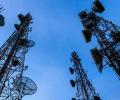
Reliance Jio has suggested an alternative plan to the The Telecom Regulatory Authority of India (Trai) under which spectrum required by non-geostationary orbit satellite (NGSO) operators to run their gateway terminals should be auctioned geographically, based on districts, rather than circles as done for mobile services. For spectrum which would be required to connect user terminals (like individual homes), Jio has suggested it should be auctioned frequency-wise and exclusively to an operator at a pan-India level. The move is significant as the auctioning of satellite space spectrum has been vehemently opposed by low earth orbit satellite operators (satellites which circle at low altitudes of 200-2000 km).
Equity mutual funds (MFs) deployed maximum in shares of Reliance Industries (RIL) in June at Rs 2,177 crore, followed by Maruti Suzuki (Rs 2,045 crore) and Bharti Airtel (Rs 1,310 crore). Shares of both RIL and Bharti Airtel have been turbulent this month. On July 1, shares of RIL crashed over 7 per cent, following the government imposing windfall taxes on domestic crude oil production and fuel exports.
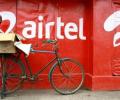
The Supreme Court on Tuesday granted 10-year time to telecom firms like Vodafone Idea, Bharti Airtel and Tata Teleservices for paying the Adjusted Gross Revenue (AGR)-related dues to the department of telecommunications with certain conditions.

Benchmark equity indices Sensex and Nifty closed higher on Friday after two days of fall, helped by buying in metal, telecom and auto stocks amid a firm trend in global markets. Automakers led by Maruti Suzuki India, Hyundai, Mahindra & Mahindra reporting robust wholesales of passenger vehicles and GST collections crossing Rs 1.50 lakh crore for the third straight month in May also added to the optimism. The 30-share BSE Sensex climbed 118.57 points or 0.19 per cent to settle at 62,547.11.

Ratan Tata was the first one to realise that Indian companies had become a prisoner to tradition and needed to radically innovate.
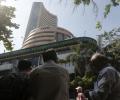
From the Sensex pack, Infosys, HCL Technologies, Infosys, NTPC, Mahindra & Mahindra, Tata Consultancy Services, Nestle, Tech Mahindra and Bajaj Finance were the major gainers. Power Grid, Larsen & Toubro, Maruti, Titan, HDFC Bank, Wipro, HDFC and ITC were among the laggards.

'Good friends are those who advise whether something is palatable for you or not.' 'Good friends are those who are not afraid of telling the truth.'

Kotak Mahindra Bank was the biggest loser from the Sensex pack, skidding 1.83 per cent, followed by Axis Bank, NTPC, Hindustan Unilever, ICICI Bank, Bharti Airtel, Reliance Industries, HCL Technologies, IndusInd Bank and Nestle. In contrast, Bajaj Finance, Bajaj Finserv, Tech Mahindra, Tata Consultancy Services, Titan, Infosys, HDFC Bank, HDFC and ITC were the gainers.

The information technology (IT) services industry could see value investors taking selective punts in the near future. While growth remains visible, managements across the board have been cautious or measured in their guidance and have also complained about a combination of margin pressures and high churn. The two factors are related in that employee compensation is a large component of IT costs and high churn has forced firms to hike compensation packages and also invest more in hiring, training, and retention.

VCs have been especially bullish about India.

Benchmark stock indices Sensex and Nifty closed higher for a second straight session on Monday following buying in index majors Reliance Industries, ICICI Bank and recovery in global markets.
Investors' wealth eroded by over Rs 4.90 lakh crore on Friday amid a sharp fall in equities. The 30-share BSE Sensex tanked 1,020.80 points or 1.73 per cent to settle at 58,098.92. During the day, it tumbled 1,137.77 points or 1.92 per cent to 57,981.95. The market capitalisation of the BSE-listed firms plummeted by Rs 4,90,162.55 crore to Rs 2,76,64,566.79 crore on Friday.

The market capitalisation of BSE-listed firms reached an all-time high of Rs 288.50 lakh crore on Wednesday amid an ongoing rally in equities, as the benchmark Sensex settled above 63,000-level for the first time ever. The 30-share BSE barometer climbed 417.81 points or 0.67 per cent to settle at 63,099.65, its fresh record closing high. During the day, the benchmark jumped 621.17 points or 0.99 per cent to 63,303.01, its lifetime intra-day peak. Extending its winning momentum to seventh day, the Sensex has rallied 1,954.81 points or 3.19 per cent during this time.

Amazon Web Services (AWS) will invest nearly $4.4 billion (Rs 36,000 crore) in India by 2030 and support more than 48,000 jobs externally through a new regional service launched on Tuesday, said the on-demand Cloud computing company. AWS Asia Pacific (Hyderabad) is the company's second infrastructure region in India, six years after it opened its first Cloud region in Mumbai in 2016. The Hyderabad region will give customers access to AWS technologies for data analytics, security, machine learning, and artificial intelligence.

After a hiatus of nearly two decades, the government's programme to privatise state-owned firms restarted with the handing over of debt-laden national carrier Air India to the Tata Group. With the new owner shelling out Rs 18,000 crore for the buyout of the 'Maharaja', this would be the highest-ever amount garnered through privatisation, and is even more than the cumulative sum mopped up through strategic sales from 1999-00 to 2003-04. The government had in October last year inked the share purchase agreement with the Tata Group for sale of national carrier Air India for Rs 18,000 crore. Tatas would pay Rs 2,700 crore cash and take over Rs 15,300 crore of the airline's debt.

With Chinese companies Huawei and ZTE excluded from participating in the 5G roll out, their absence leaves a vacuum in the market which will have to be filled by three vendors: Ericsson, Nokia and Samsung.

The split second decisions that reigning world champions Mercedes take during a race are a result of real time data provided by Tata Communications, Formula One's connectivity partner since 2012 and now the only Indian presence in the paddock.
The approval comes few days before the company has to clear statutory liabilities of up to nearly Rs 35,586 crore, of which Rs 21,682 crore is licence fee and another Rs 13,904.01 crore is spectrum dues.

A bench headed by Chief Justice S A Bobde took note of the submissions by a battery of senior lawyers including A M Singhvi and C A Sundaram and said it will list the fresh pleas "sometime in next week" before the same bench which had heard the earlier petition in the high-stake matter.
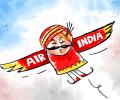
Air India sale will give a boost to India's privatisation drive, the Economic Survey said on Monday, as it suggested redefining the public sector role in business enterprises to encourage private participation in all sectors. The government earlier this month handed over ownership rights in national carrier Air India to Tata Group for Rs 18,000 crore. The amount includes the takeover of the debt burden of Rs 15,300 crore and another Rs 2,700 crore in cash.

Vodafone Idea and Airtel have made provisions for their liabilities arising from the Supreme Court order in their latest September quarter results.

Indian telecommunications companies are ringing louder. Bharti Airtel and Reliance Communications are among the big league of gloal telecom companies.

From 5G to Tesla to Covid vaccine, 10 things will shape India's future.
With the new owner shelling out Rs 18,000 crore for the buyout of 'Maharaja' this would be the highest ever amount garnered through privatisation or even the cumulative sum garnered through strategic sale in 1999-00 to 2003-04. The government had garnered roughly over Rs 5,000 crore during that five-year period by privatising 10 CPSEs.

Sources at the department of telecommunications confirmed that Bharti Airtel has submitted application to bid for airwaves frequencies at pan-India level.
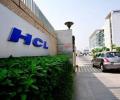
Shares of HCL Tech hit a fresh record high of Rs 1,118.55 on Friday, up 2 per cent on the BSE in intra-day trade, surpassing its previous high of Rs 1,101 touched on Thursday in intra-day deals.
Changing tracks helps. But, not taking the beaten path isn't always helpful. This is the story of two of India's biggest privatisations - Air India and Bharat Petroleum (BPCL). Nearly two decades after the last privatisation, a landmark divestment concluded this year when the loss-making national carrier Air India was sold to the Tatas.
